Your Energy System
 The body is an interconnected and a highly intricate network of trillions of cells. One of the many functions of cells is to produce energy for life. For each cell to produce energy, it needs fuel primarily in the form of glucose. The surface of each cell contains docking stations for insulin and glucose. Insulin serves as the “key” which opens cell receptors for glucose to enter.

There are other transport vehicles inside the cell called Glucose transporters (Glut). These transport vehicles carry glucose molecules to the mitochondria (the cell’s “furnace”) where the body ultimately uses it to create energy.
How Problems Begin
As carbohydrates or sugars are absorbed by the intestines after a meal and blood sugar increases, insulin is secreted by the pancreas and circulated throughout the body. As insulin binds to cell receptors, cells absorb glucose from the blood stream to produce energy and lower blood sugar levels. As blood sugar decreases, the pancreas secretes glycagon which breaks down glycogen in the liver and releases additional glucose into the blood.
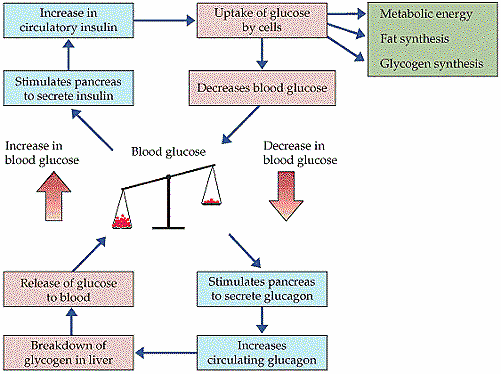
The secretion of insulin is controlled by glucose concentrations in the blood stream.
Glycemic Index (GI) is a numerical system that rates how fast carbohydrate foods break down into glucose and enter the blood stream. Historically, humans have relied on carbohydrates from natural sources such as fruits, vegetables, nuts, legumes, and grains which are generally low GI foods which raise blood sugar levels moderately to properly support your energy system for many hours.
With the advent of preservatives and flavorings in recent times, the food industry has been able produce tasty processed foods with longer shelf lives. Unfortunately many of these popular products (white bread, pretzels, chips, crackers, cookies, cakes, soda) have high GI which cause blood sugar levels to rise very quickly. When blood sugar rises quickly, the level peaks in a short time and then comes crashing down to below normal levels. Since the brain operates on blood sugar, it induces cravings in a short time to force you to eat more and raise blood sugar again. This cycle leads to continuous spiking of blood sugar and abusive release of insulin throughout the day and suppression of glucagon.
In addition, rapid rises in blood sugar causes significant inflammation to the artery’s vessels lining. When this inflammation spreads to the capillaries (the smallest arteries) of the muscles, the vessels tend to constrict and thicken. This creates a physical barrier making it more difficult for insulin in the blood stream to pass through and allow sugar to get into cells. This is the start of Insulin Resistance which means the body is becoming less sensitive to insulin.
Metabolic Syndrome
Insulin Resistance when left untreated, eventually leads to Metabolic Syndrome where insulin levels in the blood rise to high sustained levels causing a group of risk factors that lead to following chronic diseases: obesity, diabetes, heart disease, high blood pressure, and stroke.

It is believed that there are about 47 million adults in the United States that have Metabolic Syndrome and the numbers are continuing to grow significantly. Metabolic Syndrome does not develop overnight. It comes after years and years of making bad daily dietary choices. You may be at risk of Metabolic Syndrome if:
- You are older. The risk of getting metabolic syndrome is 20% in your 40s, 35% in your 50s, and 45% in your 60s and beyond.
- You are prone to blood clots and inflammation. Both are common in people with Metabolic Syndrome. Your doctor can do blood tests to find out if you are at risk.
- You have other medical conditions such as fatty liver, cholesterol gallstones, and lipodystrophy (which affects fat distribution).
- It runs in the family. If you have parents or other first degree relatives with diabetes, you are at a higher risk.
- If you are man and your waist size is above 35. If you are woman and your waist size is above 31.
- You are South Asian. South Asians have a higher risk of Insulin Resistance and Metabolic Syndrome.
The good news is Metabolic Syndrome is not a genetic disorder and is fully and completely preventable if you are completely true to the cause of making the best choices in your diet. The first conscious decision you need to make is to reverse Insulin Resistance with a healthy lifestyle and diet. Become aware of which are the high and low Glycemic foods and plan your meals accordingly. This will inevitably protect your health. Even if you are a diabetic, you can still reverse damage and continue to live an active life.
Diabetes
When Insulin Resistance is left untreated, Diabetes is a common outcome. Statistics confirm an ongoing epidemic. An estimated 18.2 million people in the United States or 6.3 percent of the population have diabetes, a serious, lifelong condition. Of those, 13 million have been diagnosed, and about 5.2 million people have not yet been diagnosed. Each year, about 1.3 million people aged 20 or older are diagnosed with diabetes. The adult-type diabetes (type II) primarily associated with being overweight made up 2 percent of new cases in children between the ages of 9 and 19 in 1980. By the year 2000, type II diabetes made up an astounding 30-50 percent of new cases of diabetes being diagnosed in this age group!
Diabetes results in more than 170,000 deaths each year in the United States. According to the World Diabetics Foundation, the prevalence of diabetics has reached epidemic proportions. The World Health Organization predicts that developing countries will bear the grunt of this epidemic in the 21st Century, with 80% of all new cases of diabetes expected to appear in developing countries by 2025. Today diabetes affects more than 230 million people worldwide or almost 6% of the adult population. The number of people living with diabetes is expected to increase to 350 million in less than 20 years if action is not taken.
Western Medicine

Western medicine relies on aggressive and costly prescription drugs to deal with problems related to Insulin Resistance, Metabolic Syndrome, and Diabetes. These methods generally address only the symptoms of blood chemistry disorders and not the underlying causes. As soon as you stop using the drugs, the problems return! And these prescription drugs often result in unwanted and even dangerous side effects.
Commonly prescribed medications include ACE inhibitors (like Capoten and Vasotec), angiotensin II receptor blockers (like Cozaar and Diovan), diuretics, beta-blockers, statins (like Crestor, Lescol, Lipitor, Mevacor, Pravachol, and Zocor), niacin (like Niacor, Niaspan, and Nicolar), bile acid resins (like Colestid and Questran), Zetia, Glucophage, Actos, and Avandia.

The combined side-effects of just a few of these medications include abdominal pain, abnormal liver function tests, acanthosis nigricans, accidental injury, allergic reaction, alopecia, anaphylaxis, anemia, anemia and ecchymosis, angina pectoris, angioedema, anorexia, anosmia, anxiety, arthralgia, arthralgias, arthritis, asthenia, asthma, ataxia, atrial fibrillation, atrial fibrillation and other cardiac arrhythmias, back pain, blurred vision, bronchitis, bronchospasm, bullous pemphigus, cardiac arrest, cardiac arrest, causing airway obstruction and/or swelling of the face, cerebrovascular accident/insufficiency, changes to hair/nails) have been reported, chest pain, chills, cholestasis, cholestatic jaundice, cirrhosis, confusion, conjunctivitis, constipation, cough increased, cystoid macular edema, decreased glucose tolerance, depression, diabetes mellitus, diaphoresis, diarrhea, discoloration, dizziness, dream abnormality, dry cough, dry eyes, dry mouth, dry skin, dryness of skin/mucous membranes, dysesthesia, dysfunction of certain cranial nerves, dysgeusia, dyspnea, elevated alkaline phosphatase, elevated bilirubin, elevated glutamyl transpeptidase, elevated transaminases, eosinophilia, eosinophilic pneumonitis, erectile dysfunction, erythema multiforme, erythroderma, esr increase, exfoliative dermatitis, facial paresis, fatty change in liver, fever, flank pain, flatulence, flushing, fulminant hepatic necrosis, gastritis, gastroenteritis, glossitis, gout, gynecomastia, headache, hemolytic anemia, hepatic failure, hepatitis, hepatoma, herpes zoster, hyperkalemia, hyperpigmentation, hypertension, hypertonia, hyperuricemia, hyponatremia, hypotension, ileus, impairment of extra-ocular movement, impotence, infection, insomnia, jaundice, jaundice, leukopenia, loss of libido, lupus erythematosus-like syndrome, malaise, melena, memory loss, mild to severe cutaneous flushing, muscle cramps, myalgia, myasthenia, myocardial infarction or cerebrovascular accident, myopathy, neck pain, nervousness, neuralgia, neutropenia, nodules, oliguria, ophthalmoplegia, orthostasis, orthostatic hypotension, pain, palpitations, pancreatitis, paresthesia, pathological fracture, pelvic pain, pemphigus, peptic ulceration, periodontal abscess, peripheral edema, peripheral nerve palsy, peripheral neuropathy, photosensitivity, pneumonia, polymyalgia rheumatica, positive ana, progression of cataracts (lens opacities), pruritus, psychic disturbances, pulmonary edema, pulmonary embolism and infarction, pulmonary infiltrates, purpura, rash and pruritus, raynaud’s phenomenon, renal dysfunction, renal failure, rhabdomyolysis, rhinitis, rhinorrhea, rhythm disturbances including atrial tachycardia and bradycardia, somnolence, sore throat and hoarseness, stevens-johnson syndrome, stomatitis, symptomatic hyponatremia, syncope, taste alteration, tearing, thrombocytopenia and bone marrow depression, thyroid function abnormalities, tinnitus, toxic amblyopia, toxic epidermal necrolysis, tremor, upper respiratory infection, urticaria, vasculitis, vasodilatation, vertigo, and vomiting.
Introducing potent synthetic chemicals into the body clearly has serious ramifications on long-term health. An amazing array of drugs have more side effects than the illnesses or problems they were designed to address.
Ayurvedic Medicine

Ayurveda, the science of life, prevention and longevity, is the oldest and most holistic and comprehensive medical system available. Its fundamentals can be found in Hindu scriptures called the Vedas – the ancient Indian books of wisdom written over 5,000 years ago. Ayurveda applies the inherent principles of nature to help maintain optimum health in a person by keeping the individual’s body, mind, and spirit in perfect equilibrium with nature.
India Herbs has a seasoned group of Ayurvedic doctors specialized in Kaya Chikitsa, one of the eight major specialties of Ayurveda that deals with Internal Medicine. It is the branch of Ayurveda that offers therapies for purification and detoxification. Kaya Chikitsa dwells deep into defining the root cause of disease and prescribes the therapeutic use of various herbal medicines and holistic treatments for stabilizing blood sugar levels while strengthening the body and overall well-being.
India Herbs’ Kaya Chikitsa doctors combine a proprietary herbal formula based on centuries’ old wisdom with advice on diet,